Writer's Perspective
The "Writer's Perspective" is a visual documentation of my childhood writings. I recreated the feelings visually using a palate mix of orange white, grey and black. Orange and white represent the happy memories while grey and back account for the sad ones. The project is a mix of non-face portraits and object photography.


Design Lead - Assignment Submission
Cracking the brief
I approached the entire framework by understanding the depth of the problem statement. I started by understanding the actual problem SemiCab is solving. It's not about logistics costs, it's about how we think about logistics costs.
Every delivery has an empty return. One empty mile doesn't hurt. But multiply that across thousands of shipments, and it's eating into time, revenue, margins, credibility, the stuff that actually matters to business owners. Most people try to fix this with rate negotiations, 3PL contracts, better TMS software. But that's treating a system problem like a cost problem.
SemiCab has a mission to create a system where business owners can be part of a network that frees them from surface-level problems and helps them solve it at the root. My approach was to make this problem statement evident in the minds of potential customers and viewers, and present SemiCab in a light that offers a solution and a partnership which benefits them. I approached the projects not just with a sense of design, but as problem solving through storytelling with content, and a visual system that works and scales.


Efficiency isn't a feature you add. It's a vantage point you're missing.
Don't treat the symptoms, treat the problem at its root.
Semicab should educate before selling, how to do that through design?
By design, not by effort. Keep circling back to this line.
If a customer saw only the visual system (no copy), would they still get it?
What does "systemic cost" even mean to a shipper?
Lens vs load. Same trucks, same routes, just a different zoom level.
Brainstorming the problem statement

Task 1 - Strategic Approach

Hero fold
I decided to use a minimal yet efficient visual and copy system to show how each mile costs the business. Each time the truck moves a mile, it displays revenue loss, time loss, and so on. Once the user looks at the hero fold, they register a problem which the rest of the page promises to solve.
Second Fold
I focused on the system SemiCab uses to solve the problem orchestration (getting data under one roof), optimization (making decisions collectively), and execution (the network system). I chose data and product-centric visuals to show each step in depth, making the system tangible rather than ambiguous.
Third fold
I bring the customers to ponder over the "one network" thought and the advantages they can unlock from SemiCab. At the same time, I decided to bring a visual break into the page balancing information hierarchy with design that leaves room for delight, thought to ponder, and breathing room as a whole.

Execution Note
The page is designed and executed on Claude Code, reducing dependency on traditional page development, motion design, and debugging issues like load time, alignment fixes, and design mismatch. Prompting is my key to designing with AI it brings efficiency and system thinking into design itself.

Task 2 - Visual framework
I used movement and intersection as the visual metaphor. In load-level thinking, paths are parallel each load travels independently, never intersecting. In network-level thinking, the bird's eye view reveals paths that intersect. Moving dots (loads) create touchpoints and collaboration opportunities.
The insight: parallel lines stay separate. Intersecting lines create value. Once you see the intersection, a network system becomes possible.



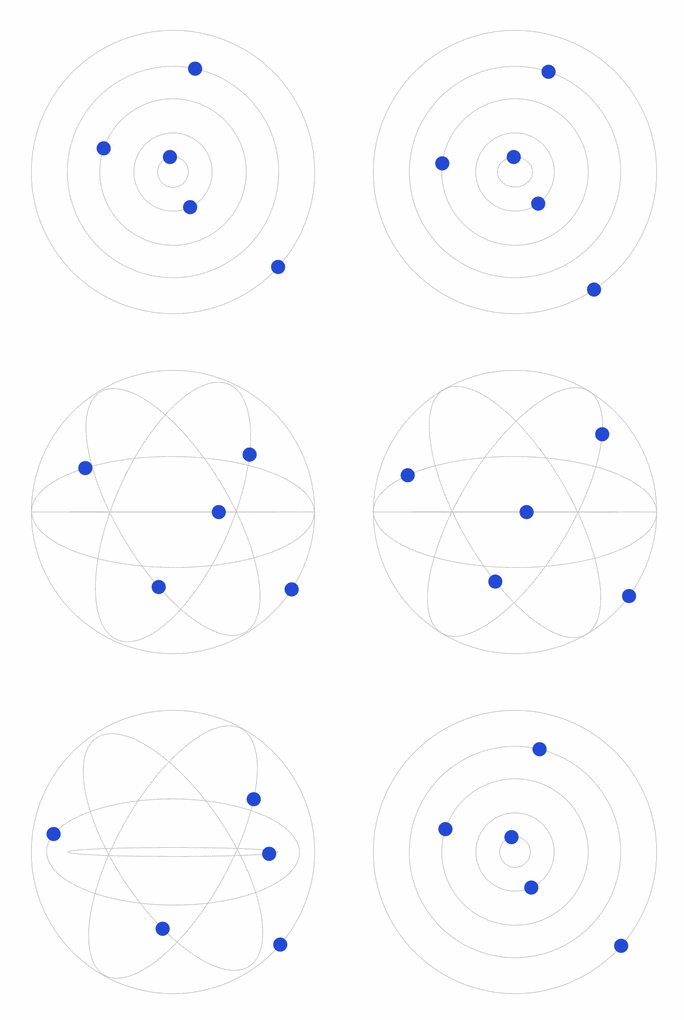


Get everything into one network. All the data movement patterns, paths, delivery history, time, fuel costs. Every variable that shapes a shipment lives in one place. That's when you can build a plan that actually works.
Make the best decision for one load. But here's the key: that decision carries forward to the next load, and then the next. It's not about isolated wins. It's about each optimization improving the conditions for what comes after.
Build a system that runs on its own. One that affects each load for the better, without needing constant intervention or manual tweaks. The system becomes the solution.
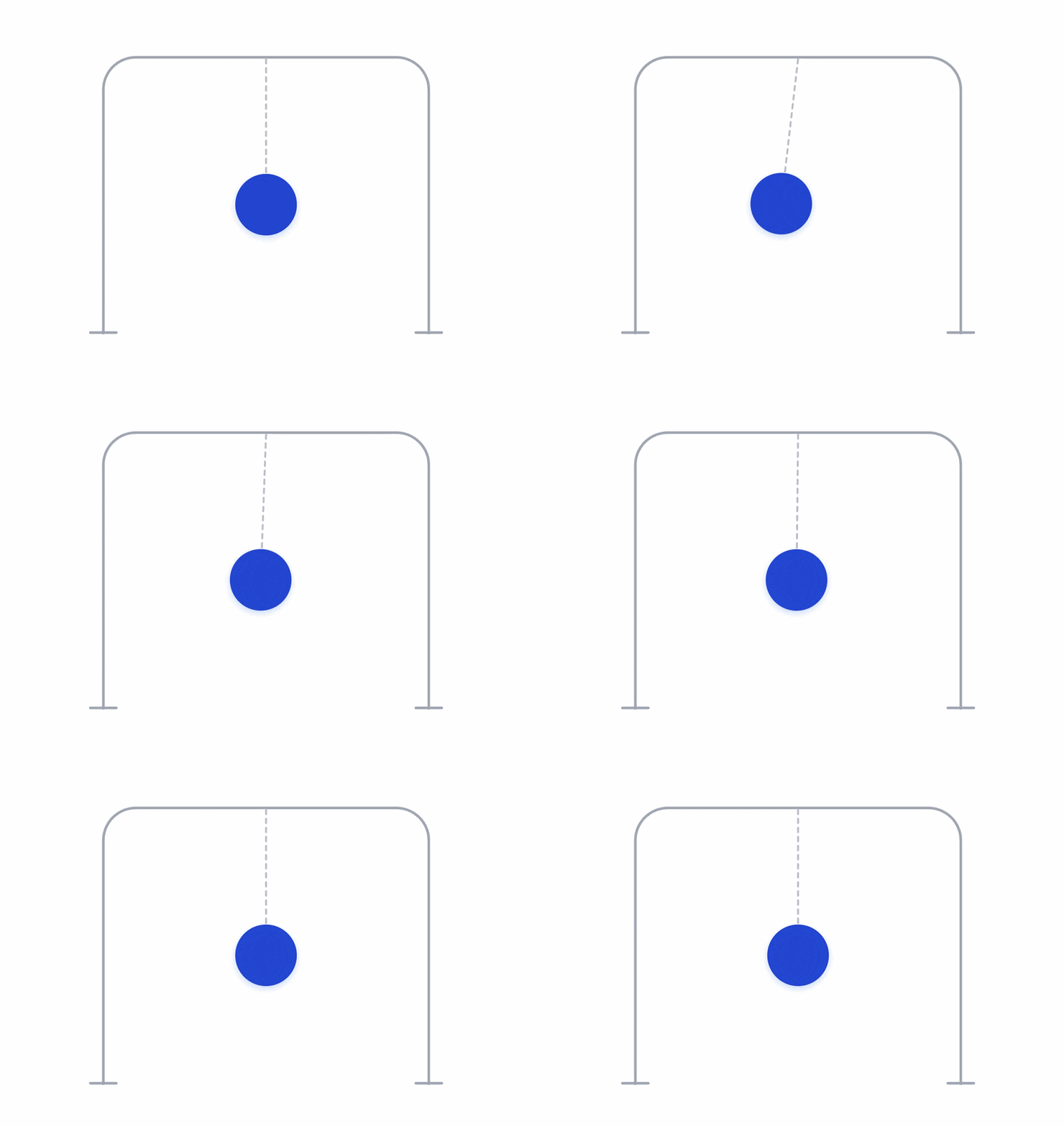
The Current State: Isolated Movements, Constant Intervention
This is how businesses are thinking right now. The pendulum swings back and forth, negotiating rates, adjusting routes, tweaking contracts. Each decision is isolated. Each swing requires constant effort and attention. Nothing sticks.
Task 3 - Information design
I developed a visual that shows the overall value and impact, both gains and losses caused by each action separately. Negotiation has gains. 3PLs have gains. TMS has gains. But each one also misses the hidden losses compared to the alternative.
Network-level problem solving changes the equation. It shows an overall increase in gains while also decreasing losses. The visual makes clear: individual optimizations create isolated wins. High value gain only exists within the network system, not in individual efforts.

End note
Across all three tasks, the goal was the same: help decision-makers see what SemiCab sees. The problem isn't cost. It's how you think about cost.
These designs exist to move people from "how do I negotiate better rates" to "how do I join a better system."